
A pulse oximeter is a simple device that allows users to check blood oxygen saturation (SpO₂) and pulse rate within seconds.
While taking a measurement is easy, the results can sometimes be affected by how the device is used. Factors such as cold fingers, body movement, and incorrect placement may influence the reading.
By avoiding a few common mistakes, users can make their measurements more consistent and get a better understanding of their daily health data.
1. Using a Pulse Oximeter With Cold Fingers

Cold fingers are one of the common reasons why pulse oximeter readings may not appear stable.
When fingers are cold, blood circulation in the fingertip may decrease, making it harder for the sensor to detect signals properly.
How to improve:
- Warm your hands before measurement.
- Keep your fingers relaxed during testing.
- Avoid measuring immediately after being outdoors in cold weather.
2. Moving Too Much During Measurement

A pulse oximeter needs a stable signal to measure SpO₂ and pulse rate.
Moving your hand, shaking your finger, or changing position during measurement may affect signal stability and result in fluctuating readings.
How to improve:
- Sit comfortably before taking a measurement.
- Keep your hand and finger still.
- Wait until the displayed value becomes stable before recording the result.
3. Measuring Right After Exercise
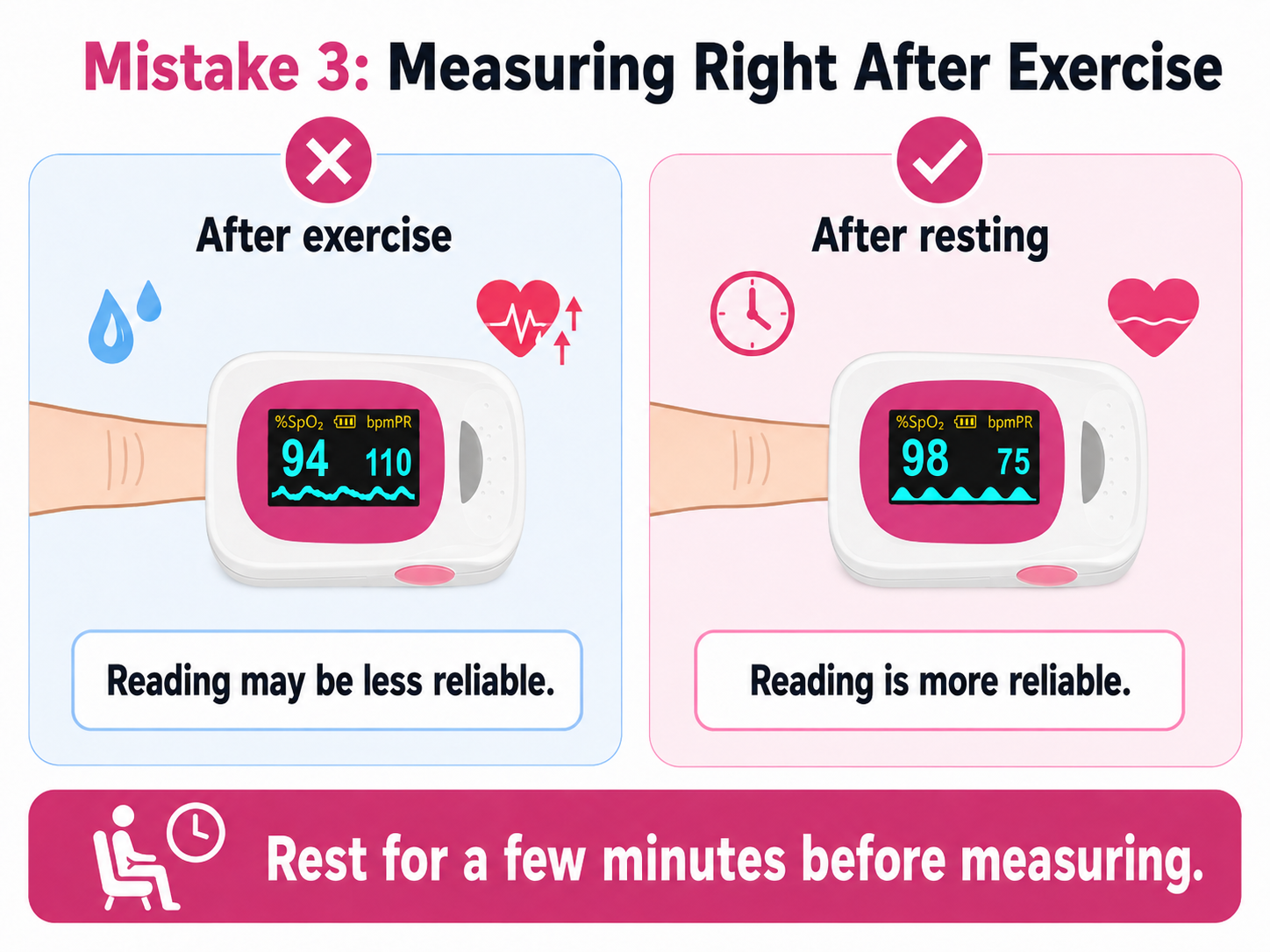
After exercise, your body is still adjusting. Heart rate and breathing patterns may remain different from your normal resting state.
Taking a measurement immediately after physical activity may not reflect your usual condition.
How to improve:
- Rest for several minutes before checking your SpO₂.
- Try to measure under similar conditions when monitoring changes over time.
4. Placing Your Finger Incorrectly
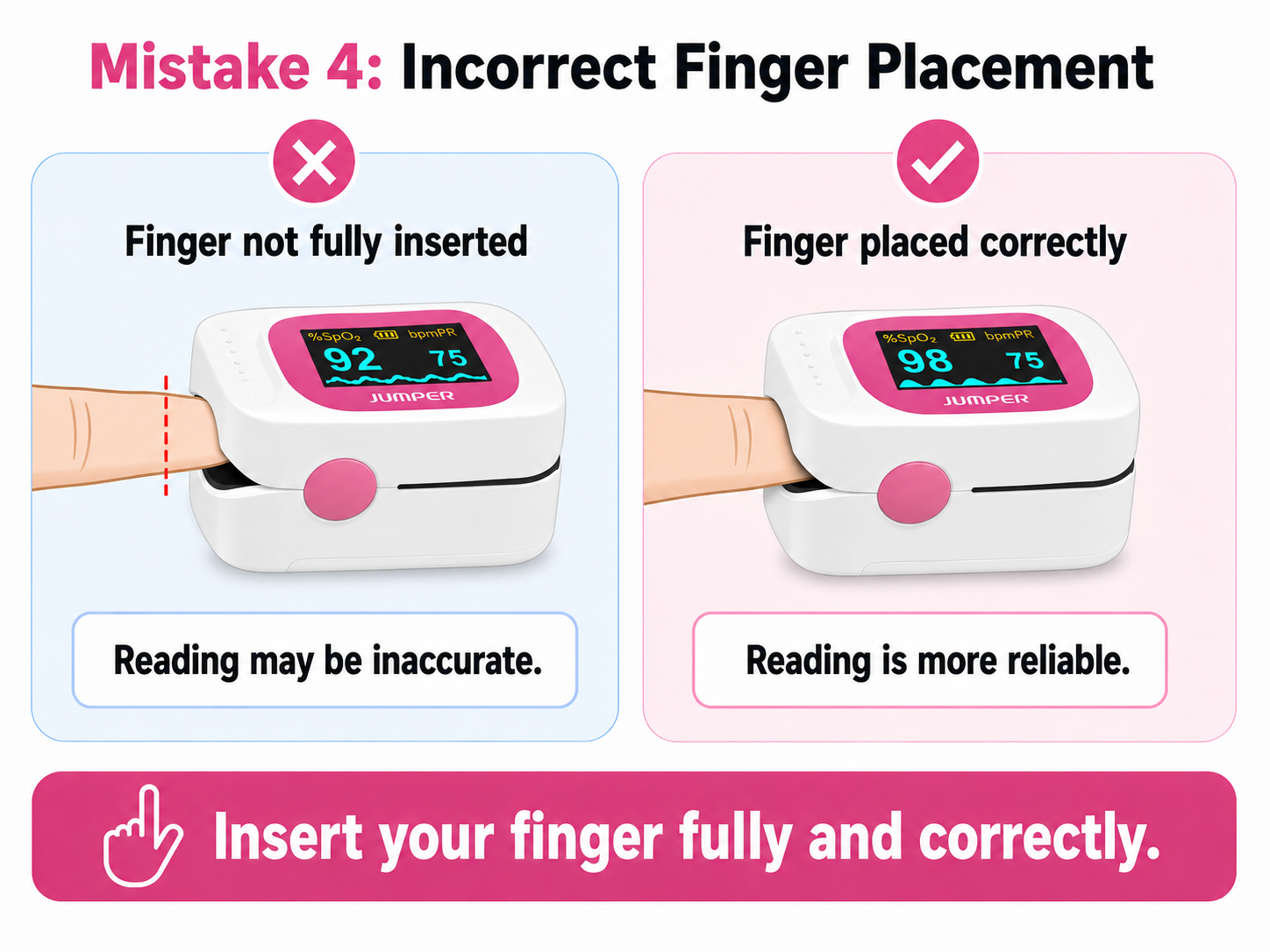
Correct finger placement is important for obtaining a reliable measurement.
If the finger is not positioned properly inside the pulse oximeter, the sensor may not receive an optimal signal.
How to improve:
- Insert your finger fully into the measurement area.
- Make sure the fingertip is aligned with the sensor.
- Avoid pressing or moving your finger during measurement.
5. Checking Only One Reading
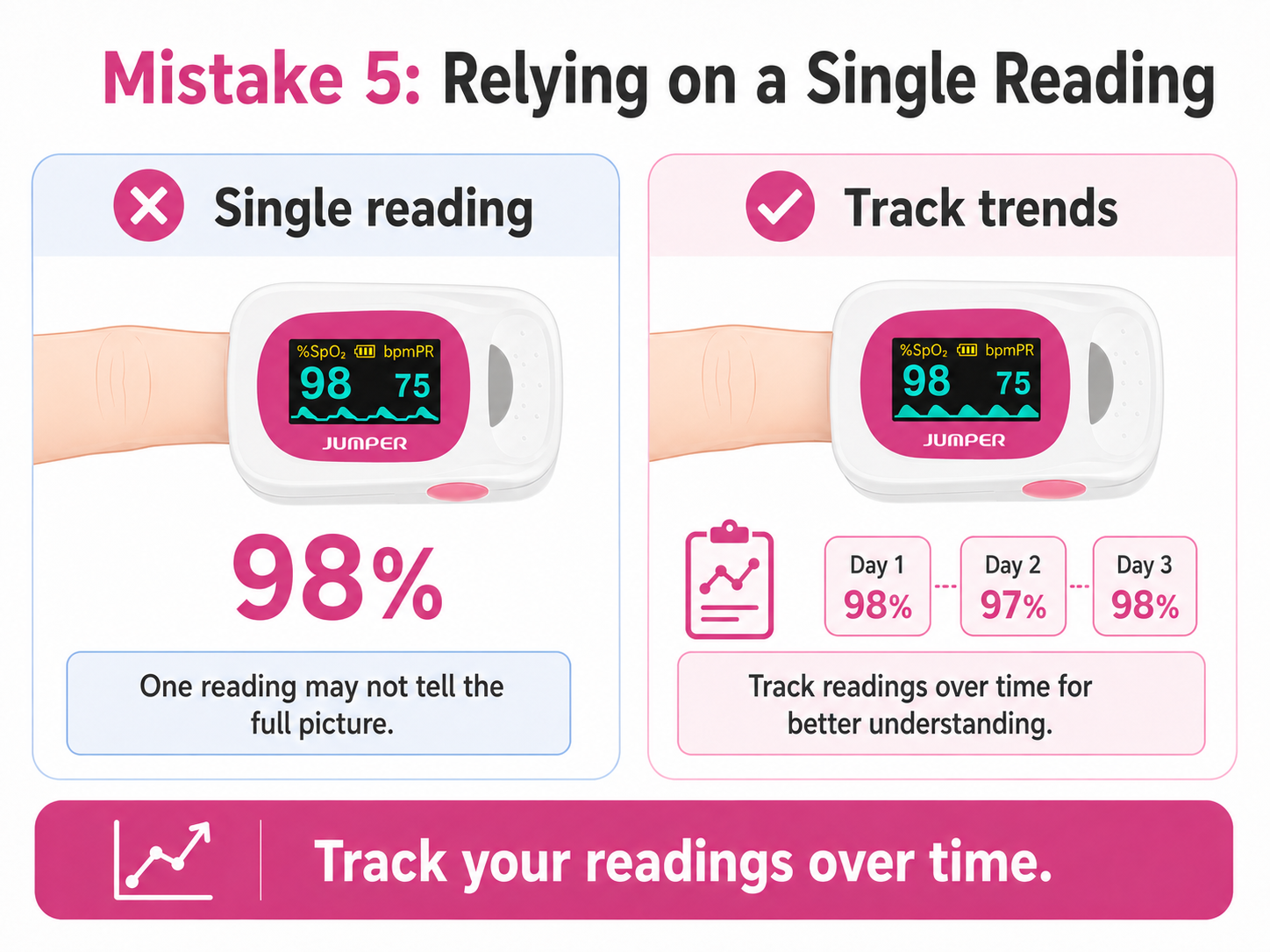
A single SpO₂ reading shows your condition at one specific moment.
Daily activities, body position, and measurement conditions may cause small variations. Looking at changes over time can provide a more complete picture.
How to improve:
- Take measurements consistently.
- Record readings if regular monitoring is needed.
- Focus on overall trends rather than a single result.
Other Factors That May Affect Pulse Oximeter Readings
Besides measurement habits, several factors may influence readings, including:
- Cold skin temperature
- Hand movement
- Poor circulation
- Nail polish or artificial nails
- Incorrect device positioning
Following proper measurement steps can help improve consistency when using a pulse oximeter at home.
How to Use a Pulse Oximeter Correctly at Home
For more consistent measurements:
- Sit comfortably and relax before testing.
- Make sure your hands are warm and clean.
- Place your finger correctly inside the device.
- Keep your hand still until the reading stabilizes.
- Record results when regular monitoring is required.
A pulse oximeter provides a convenient way to check SpO₂ and pulse rate at home.
Small details, such as keeping your hands warm, staying still, and positioning your finger correctly, can make a difference in measurement consistency.
By using the device properly and paying attention to changes over time, users can make better use of home health monitoring tools.